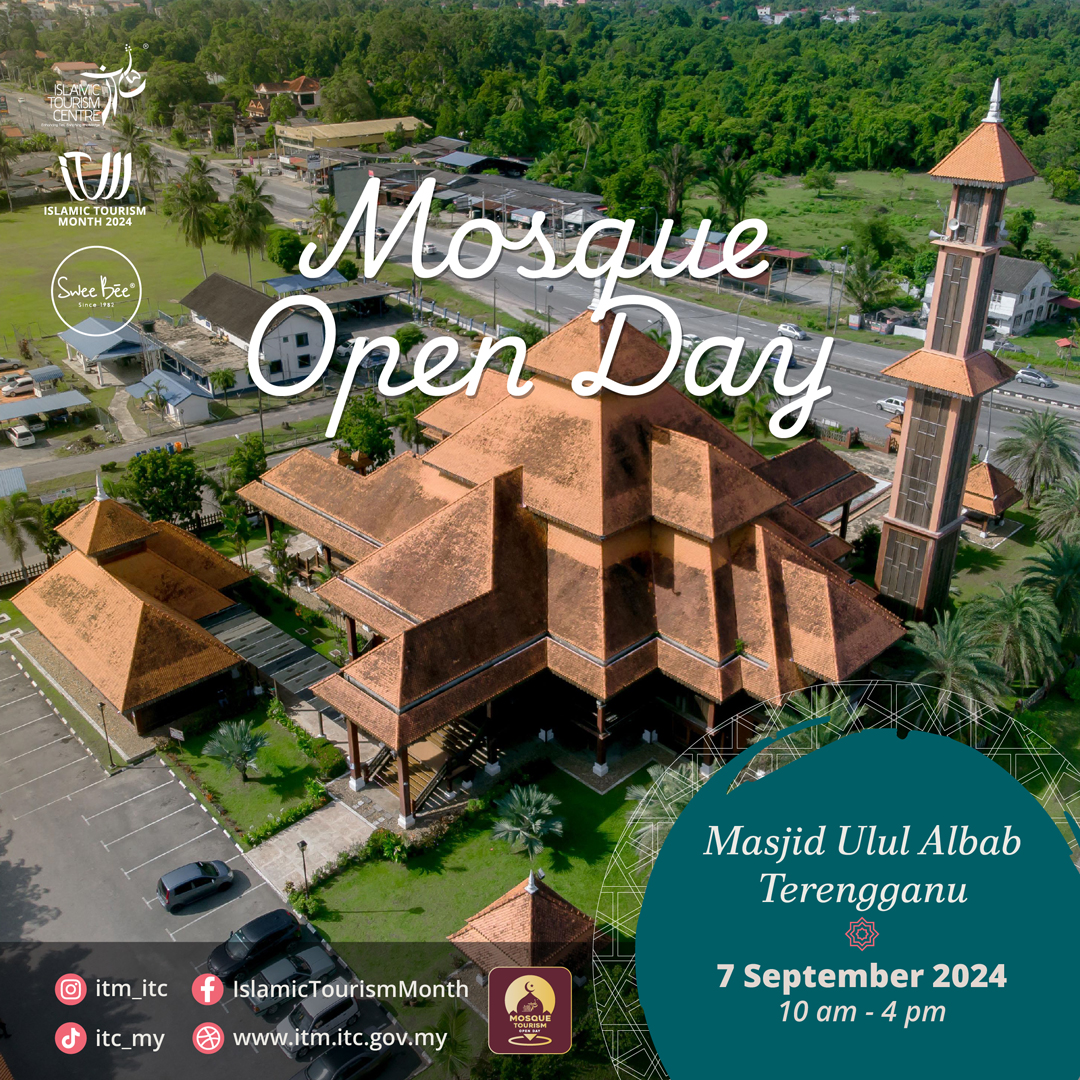
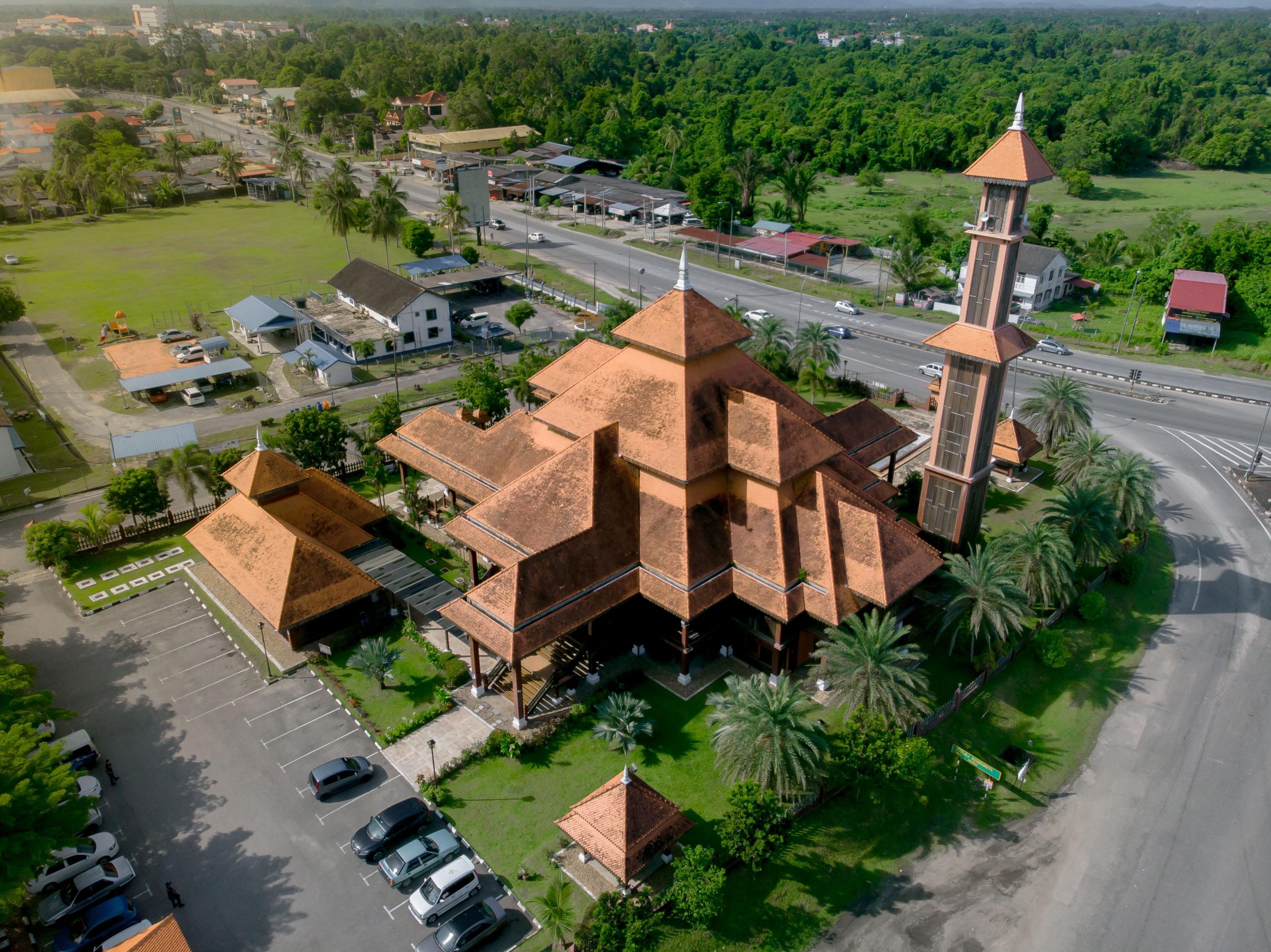
In the spirit of reviving the traditional Malay vernacular characteristics and craftsmanship, Masjid Ulul Albab was unveiled as a replacement to the old mosque in the town of Jerteh, Terengganu. Unlike the common postmodern mosque designs in Malaysia, the mosque was built without the use of onion- shaped domes; instead, it was built using Malay traditional carvings and the use of hip roofs of various sizes. Officiated by the Sultan of Terengganu, Sultan Mizan Zainal Abidin in 2012, the mosque has since become a focal attraction in this area. Surrounded by a police station and many residential houses, the mosque portrays the thriving traditional Malay woodcarving industry that has flourished in the East Coast state of Terengganu, thus keeping alive and promoting the state’s traditional skills.
The architecture of the mosque was inspired by Masjid Kampung Laut and the Kelantanese Perabung Lima traditional houses. This is seen in its layout design and the use of the pyramidal roof forms, where the tiered roof spans over the rectangular layout extended over the veranda areas and shading the area from the hot tropical sun. The mosque proper includes the main prayer hall with an Imam’s room, the female prayer area, and the veranda area is raised above on the upper ground floor level. On the first floor, a library space is provided. A large area for a hall and dining area is also located on the ground level. A separate block houses the toilet and ablution facilities. For practical reasons, its post and beam structure system are made of reinforced concrete that have been clad with chengal hardwood to appear to look as solid as if it was made of timber. However, certain parts such as the roof wall panels, floor boards and staircases are made of solid wood. Elaborate Malay carvings of songket motif can be seen throughout the balustrade and lattice panels, combined with floral motifs known as awan larat carved into the 12 main doors and on the crafted panel frames on its high wall, called the janda berhias. A unique carving pattern with pointed elements is also visible on the fascia boards around the mosque.
Contacts
Location
Masjid Ulul Albab, Kampung Seberang Jertih, 22000 Jerteh, Terengganu